Religion has influenced human culture for centuries. Beyond prayer and worship, religious beliefs have shaped some of the world’s most recognizable forms of art, music, architecture, literature, and cultural traditions.
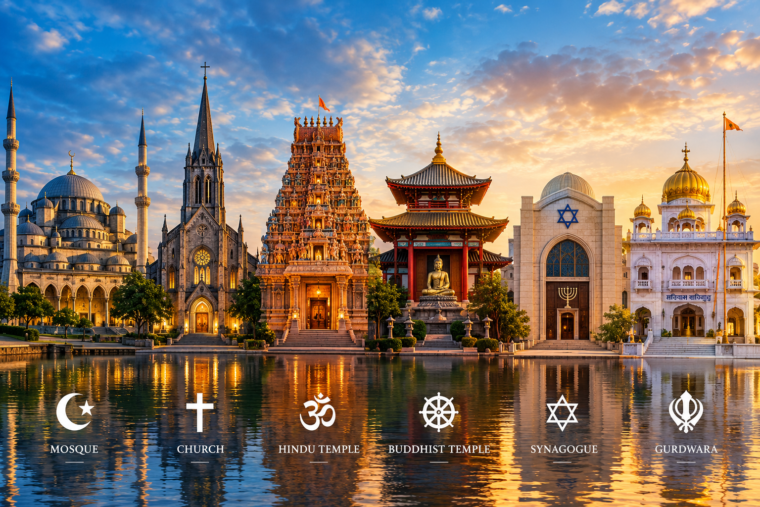
From magnificent churches and mosques to Hindu temples, Buddhist monasteries, synagogues, and gurdwaras, places connected with faith often reflect the beliefs and history of the communities that built them.
Religion and Art
Religious beliefs have inspired artists throughout history.
Paintings, sculptures, calligraphy, decorative designs, textiles, and other forms of art have been used to communicate spiritual ideas and tell important religious stories.
Christian art has often depicted scenes from the life of Jesus and stories from the Bible. Islamic artistic traditions are especially known for calligraphy, geometric patterns, and intricate decoration. Hindu and Buddhist traditions have developed rich visual traditions featuring sacred figures, stories, symbols, and symbolic designs.
Religious art can therefore serve both an artistic and spiritual purpose.
Sacred Architecture
Architecture is another area strongly influenced by religion.
Religious buildings are often designed to create a special environment for worship, reflection, and community gatherings. Their size, layout, decorations, entrances, towers, domes, windows, and interior spaces can all carry cultural or religious meaning.
Churches may feature towers, crosses, stained glass, and large gathering spaces. Mosques can include domes, minarets, courtyards, and beautiful calligraphy. Hindu temples often contain detailed carvings and sacred spaces, while Buddhist temples and monasteries may feature statues, paintings, and meditation areas.
Churches and Christian Architecture
Christian architecture has developed many different styles throughout history.
Large cathedrals in Europe are known for their impressive height, stained-glass windows, stone carvings, and detailed interiors. Other Christian communities use much simpler churches designed primarily as spaces for prayer and community worship.
Architecture can vary significantly between Christian denominations and regions, showing how faith interacts with local culture.
Mosques and Islamic Architecture
Mosques are important places of worship in Muslim communities.
Islamic architecture varies widely across different countries and historical periods. Common features may include prayer halls, courtyards, domes, minarets, arches, and decorative calligraphy.
Geometric patterns and artistic designs are also important features of many Islamic buildings.
Hindu Temples
Hindu temples can be highly diverse because Hindu traditions developed across many regions and cultures.
Many temples contain detailed sculptures, carvings, colorful decorations, and carefully designed sacred spaces. Temple architecture can communicate stories and ideas connected with Hindu traditions.
Some temples are also important centers for festivals, community activities, and religious education.
Buddhist Architecture
Buddhist architecture includes temples, monasteries, stupas, meditation centers, and other sacred structures.
Designs vary between different Buddhist traditions and regions. Some buildings emphasize peaceful gardens and meditation spaces, while others are decorated with paintings, statues, and symbolic artwork.
Buddhist architecture often creates an environment intended to support reflection, meditation, and spiritual practice.
Judaism and Synagogue Architecture
Synagogues are important centers of Jewish worship, learning, and community life.
Their architecture differs around the world depending on local history and culture. Interior spaces commonly include areas for prayer and reading the Torah.
Jewish artistic traditions can also be seen in decorative objects, manuscripts, textiles, and architectural details.
Sikh Gurdwaras
Gurdwaras are places where Sikh communities gather for worship, learning, and community activities.
One of the most important features of Sikh community life is the tradition of langar, a community meal offered to people regardless of background.
Gurdwara architecture can vary, but many buildings include prominent domes, spacious prayer halls, and community areas.
Religion and Music
Music is another powerful way people express faith.
Religious music can include hymns, chants, devotional songs, recitation, instrumental performances, and traditional melodies.
Christian worship may include hymns and contemporary worship music. Islamic traditions include forms of Qur’anic recitation and devotional music in some cultural contexts. Hindu traditions include devotional singing and chanting, while Buddhist communities may use chanting and instruments during religious practices.
Music can create a sense of community and help people focus during worship or spiritual reflection.
Religious Festivals and Performing Arts
Religion also influences cultural performances during festivals and celebrations.
Dance, drama, storytelling, music, costumes, and traditional performances may be connected with religious events. These traditions can help communities preserve their history and pass cultural knowledge from one generation to another.
In many societies, religious festivals combine spiritual practices with local cultural traditions.
Religion and Literature
Sacred texts have inspired generations of writers, poets, scholars, and artists.
Religious stories and teachings have influenced literature, philosophy, poetry, and storytelling across many cultures.
Even outside religious settings, themes such as faith, morality, sacrifice, forgiveness, hope, and the search for meaning have appeared in countless works of literature.
Why Religious Art and Architecture Matter
Religious art, music, and architecture provide more than visual beauty or entertainment. They can preserve history and show how communities understand their faith.
They also demonstrate how religion interacts with language, geography, politics, craftsmanship, and local culture.
Studying these traditions can help people understand both religious history and the development of human civilization.
Respecting Religious Culture
When exploring religious art, music, or architecture, cultural and religious sensitivity is important.
A building, painting, song, or object that may appear artistic to an outsider can have deep spiritual meaning for believers. Visitors should learn local customs and follow the rules of religious places.
Respectful learning allows people from different backgrounds to appreciate religious traditions without misrepresenting them.
Final Thoughts
Religion has played a major role in shaping art, music, architecture, literature, and cultural traditions around the world.
Churches, mosques, temples, monasteries, synagogues, and gurdwaras reflect the creativity and devotion of the communities that built and used them. Religious music, artwork, storytelling, and festivals continue to connect people with their traditions today.
Understanding this connection between faith and culture can help us appreciate the remarkable diversity of religious life around the world.
