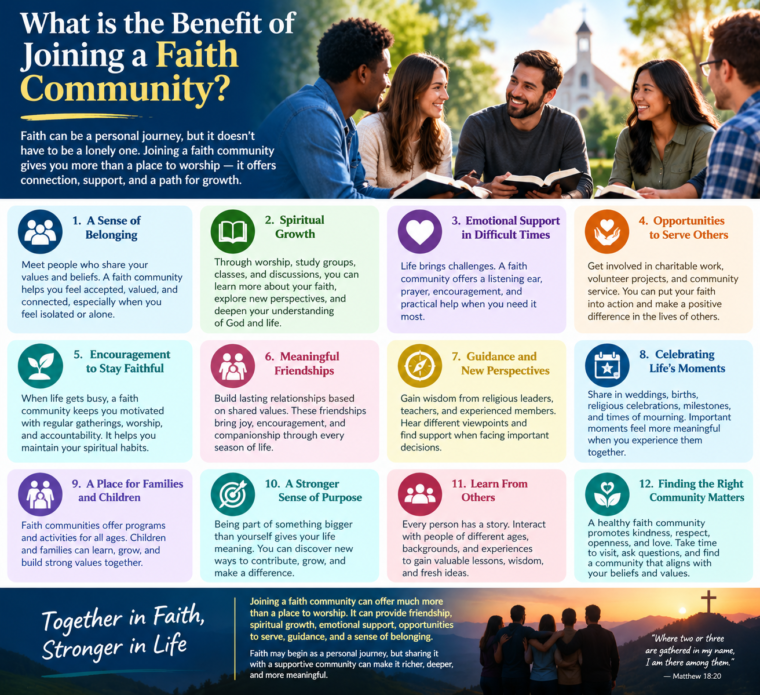
Faith can be deeply personal, but it does not always have to be practiced alone. Throughout history, people have gathered together to worship, pray, learn, support one another, and serve their communities. Today, a faith community can provide a place where individuals build meaningful relationships while growing spiritually.
Whether someone joins a church, mosque, synagogue, temple, or another religious community, being surrounded by people who share spiritual values can bring encouragement, connection, and a stronger sense of purpose.
1. A Sense of Belonging
One of the greatest benefits of joining a faith community is the feeling of belonging. People can meet others who share similar beliefs, values, and hopes.
For someone who feels isolated or disconnected, becoming part of a welcoming community can provide meaningful friendships and a sense of being accepted.
2. Spiritual Growth
Faith communities often provide opportunities to learn through worship services, religious classes, Bible studies, discussion groups, lectures, and personal reflection.
Learning alongside others can introduce new perspectives and encourage individuals to explore their beliefs more deeply.
3. Emotional Support During Difficult Times
Life can bring periods of grief, stress, uncertainty, and disappointment. During these moments, having people who are willing to listen and provide encouragement can make a significant difference.
Faith communities often come together to support members through difficult circumstances by offering companionship, prayer, practical assistance, or simply a caring presence.
4. Opportunities to Serve Others
Many religious communities organize charitable activities and volunteer projects. Members may help families in need, visit elderly people, support local organizations, provide food, or participate in community projects.
Serving others allows people to put their spiritual values into action and make a positive contribution to the wider community.
5. Encouragement to Maintain Faith
Maintaining spiritual habits can sometimes be difficult when life becomes busy. A faith community can provide encouragement and accountability.
Regular gatherings, worship, study groups, and conversations with other believers can remind individuals to make time for prayer, reflection, and spiritual growth.
6. Meaningful Friendships
Faith communities can provide opportunities to build friendships based on shared values rather than convenience alone.
These relationships can develop through worship, volunteering, classes, community events, and informal conversations. Over time, they can become an important source of companionship and encouragement.
7. Guidance and Different Perspectives
People sometimes face difficult questions about relationships, morality, purpose, forgiveness, and personal decisions. A faith community can provide opportunities to hear different perspectives and learn from the experiences of others.
Religious leaders, teachers, and experienced community members may also provide guidance within the traditions and teachings of their faith.
8. Celebrating Important Moments Together
Faith communities often come together during important moments in people’s lives, including weddings, births, religious celebrations, milestones, and times of mourning.
Sharing these experiences with others can make important moments feel more meaningful and can strengthen relationships within the community.
9. A Place for Families and Children
Faith communities can also provide families with opportunities to learn and participate together. Children may take part in age-appropriate educational programs, activities, celebrations, and community service.
These experiences can help families discuss values, compassion, responsibility, and spirituality together.
10. A Stronger Sense of Purpose
Being part of a faith community can encourage individuals to look beyond their personal concerns and think about how they can contribute to others.
Through worship, service, compassion, and shared responsibilities, people may develop a stronger sense of purpose and connection to something larger than themselves.
11. Opportunities to Learn From Others
Everyone has a different life story. Spending time with people from different ages and backgrounds can provide valuable lessons and perspectives.
Older members may share experiences and wisdom, while younger members can bring new ideas and energy. These interactions can strengthen the entire community.
12. Finding the Right Community Matters
Joining a faith community should be a positive and respectful experience. A healthy community should encourage kindness, dignity, openness, and responsible behavior.
People can take time to visit different communities, learn about their teachings, meet members, and consider whether the environment aligns with their beliefs and values.
Conclusion
Joining a faith community can offer much more than a place to worship. It can provide friendship, spiritual growth, emotional support, opportunities to serve, guidance, and a sense of belonging.
Faith may begin as a personal journey, but sharing that journey with a supportive community can make it richer and more meaningful. Whether through prayer, learning, friendship, or service, a faith community can help individuals grow while encouraging them to make a positive difference in the lives of others.
