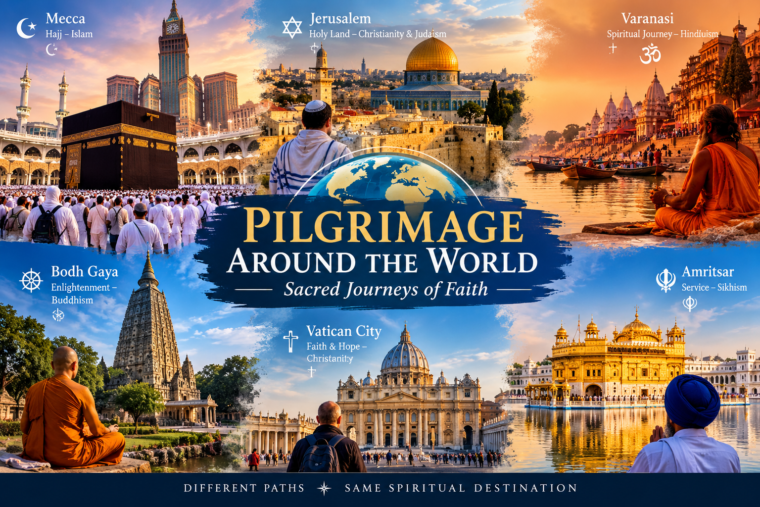
For thousands of years, people have traveled to places they consider sacred. These journeys, often called pilgrimages, can be an important expression of faith, devotion, reflection, and spiritual commitment.
Pilgrimage exists in many religious traditions around the world. The purpose, destination, rituals, and meaning can be very different from one faith to another, but the journey itself can be deeply meaningful for those who undertake it.
What Is a Pilgrimage?
A pilgrimage is a journey to a place that has special religious or spiritual importance.
People may make a pilgrimage to pray, fulfill a religious obligation, express gratitude, seek spiritual growth, remember an important religious figure, or participate in an established tradition.
Some pilgrimages take place over a few hours, while others can involve traveling hundreds or thousands of miles.
Islamic Pilgrimage to Makkah
One of the world’s best-known pilgrimages is Hajj, the pilgrimage to Makkah in Saudi Arabia.
Hajj is an important Islamic obligation for Muslims who are physically and financially able to undertake it. It takes place during a specific period of the Islamic calendar and includes a series of established religious rites.
Muslims also undertake Umrah, a pilgrimage to Makkah that can be performed at other times of the year.
For many Muslims, visiting the holy sites of Makkah represents a profound expression of faith and devotion.
Christian Pilgrimage
Christian pilgrimage has a long history. Christians have traveled to locations associated with Jesus Christ, the apostles, saints, and important events in Christian history.
Jerusalem is an important destination for many Christian pilgrims. Other pilgrimage destinations include Rome and Santiago de Compostela in Spain.
The Camino de Santiago, for example, consists of historic pilgrimage routes leading toward the shrine of Saint James in Santiago de Compostela.
Christian pilgrimages can involve walking, prayer, visiting churches and sacred sites, and personal reflection.
Hindu Pilgrimage Traditions
Pilgrimage is also an important practice in many Hindu traditions.
Hindu pilgrims visit temples, rivers, mountains, and other locations considered sacred. Pilgrimage may be known as tirtha yatra, meaning a journey to a sacred crossing or place.
The Ganges River has special significance for many Hindus, and cities such as Varanasi have long been important centers of pilgrimage.
Different Hindu traditions have their own pilgrimage destinations and customs.
Buddhist Pilgrimage
Buddhist pilgrimage often focuses on places associated with the life and teachings of the Buddha.
Important destinations include Bodh Gaya in India, where Buddhist tradition associates the Buddha with attaining enlightenment, as well as other locations connected with important events in his life.
Buddhist pilgrims may meditate, pray, make offerings, listen to teachings, and visit temples and monasteries.
Pilgrimage can provide an opportunity for quiet reflection and spiritual practice.
Sikh Pilgrimage
Sikh communities also have important sacred places connected with Sikh history.
The Golden Temple, or Harmandir Sahib, in Amritsar is one of the most significant Sikh sites and attracts visitors and pilgrims from around the world.
Other gurdwaras are connected with important events in the lives of the Sikh Gurus and the history of Sikhism.
For many Sikh visitors, pilgrimage is connected with prayer, community, remembrance, and devotion.
Why Do People Go on Pilgrimage?
People undertake religious journeys for many different reasons.
Common motivations include:
- Deepening their faith
- Visiting an important sacred place
- Fulfilling religious traditions
- Seeking spiritual reflection
- Expressing gratitude
- Praying for themselves or others
- Learning more about their religious history
- Meeting members of their faith community
The meaning of pilgrimage is personal and can vary greatly between individuals.
Pilgrimage and Community
Pilgrimage is often a communal experience. People may travel with family, friends, religious groups, or large communities of fellow believers.
Traveling together can create a strong sense of connection. Pilgrims may share meals, stories, prayers, and experiences during the journey.
Religious pilgrimages can therefore strengthen relationships within faith communities.
The Spiritual Meaning of Travel
A pilgrimage is different from ordinary travel because its purpose is connected with faith or spirituality.
The journey itself can become part of the experience. Long distances, unfamiliar surroundings, physical effort, and time away from everyday routines may give pilgrims opportunities for reflection.
For many people, reaching a sacred destination is only one part of the pilgrimage. The journey can also be meaningful.
Respecting Sacred Places
Sacred destinations can be active places of worship rather than tourist attractions.
Visitors should learn about local customs and follow rules established by religious communities and site authorities. Depending on the location, this may include appropriate clothing, removing shoes, observing quiet areas, respecting photography restrictions, and following instructions regarding access.
Respectful behavior helps protect the religious meaning of sacred places.
Pilgrimage in the Modern World
Modern transportation has made many pilgrimage destinations easier to reach. People can travel internationally by plane, train, bus, or other forms of transportation.
At the same time, traditional pilgrimage routes continue to attract people who choose to walk or travel in ways that preserve the historic character of the journey.
Technology has also changed the experience. People can learn about sacred destinations online, research routes, and connect with other pilgrims before traveling.
Pilgrimage as a Journey of Reflection
For many believers, pilgrimage is not simply about reaching a particular destination. It can be a period of personal reflection.
Being away from everyday responsibilities can give people time to think about their faith, relationships, hopes, challenges, and goals.
The experience can be different for every person, but the combination of travel, community, tradition, and spiritual purpose makes pilgrimage an important part of religious life around the world.
Conclusion
Pilgrimage is one of the world’s enduring expressions of faith. From Hajj in Makkah to Christian journeys in the Holy Land and Santiago de Compostela, Hindu pilgrimage traditions, Buddhist sacred sites, and Sikh journeys to important gurdwaras, people continue to travel in search of spiritual connection and meaning.
These journeys demonstrate the diversity of religious traditions while showing how sacred places can connect people with faith, history, community, and personal reflection.
Understanding pilgrimage traditions can help us appreciate the many ways people around the world express their beliefs and devotion.
